
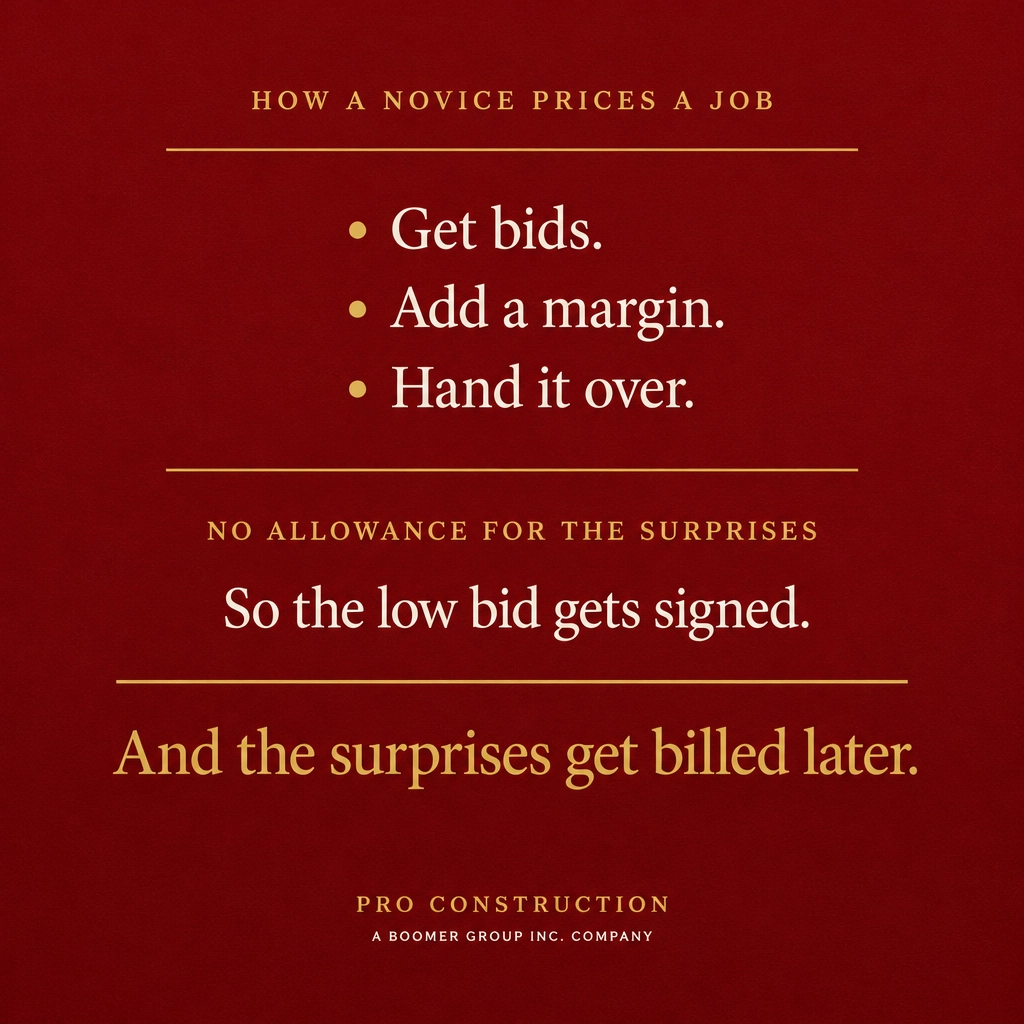
Before you sign, could you explain what your contract actually covers, and what could change once work begins? Knowing the right questions to ask a home builder in North Texas helps bring unclear assumptions into the open. A careful review of scope, pricing, approvals, and documentation can protect your home and your budget from preventable misunderstandings.
The checklist below is a practical starting point for a home addition, detached garage, workshop, or custom build. Read the agreement, exhibits, plans, and schedules as one package. If a term is unclear, ask for a written explanation before you sign; for legal interpretation, have a Texas construction attorney review the contract.
Contract structure: What does the price ceiling cover?
Start by identifying whether the agreement is cost-plus or a Guaranteed Maximum Price (GMP). The label matters less than the terms defining the work, the limits, and the exceptions. A GMP is meaningful when its scope and exclusions are specific, not when important costs are left open to interpretation.
- What pricing structure am I signing? Ask the builder to explain how the contract treats actual costs, the builder’s fee, and changes.
- What exactly does the GMP ceiling cover? Confirm how the agreement treats labor, materials, site work, project coordination, permits, and other defined items.
- What is excluded? Look for specific exclusions and conditions that may affect the contract amount, rather than relying on general language.
- How are allowances defined? Ask which selections have allowances, what each allowance includes, and how credits or additional charges are handled.
- How are changes priced? Confirm that each proposed change is documented and approved before work proceeds.
Compare this section with the plans and specifications. If you are weighing pricing models, our guide to choosing a builder in Keller, TX explains cost-plus and GMP considerations. Our breakdown of cost-plus vs. a Guaranteed Maximum Price can also help you compare proposals on the scope included, not just the total shown.
Scope definition: Is the work written down line by line?
A clear scope sets expectations for both parties and gives the project team a practical reference as work moves from plans to the job site. Broad labels such as “complete addition” may not tell you which materials, connections, or finish details are included.
- Is the scope itemized? Look for a written description of the work by area, trade, or project phase.
- Are materials and products identified? Confirm relevant product names, models, sizes, finishes, or performance requirements are documented.
- Does the contract say what is not included? Ask for a written exclusions list, including work you may assume is part of the project.
- Are site work and cleanup addressed? Clarify how access, protection of existing areas, debris removal, and final cleanup will be handled.
- Do the plans and scope agree? Resolve differences before signing and identify which documents control if two exhibits conflict.
For reference, explore PRO Construction’s services for home additions and detached garages and workshops. For guest-house projects, connect with DFW ADU Pro, PRO Construction’s affiliated division.
Selections timing: What needs a decision, and when?
Some choices affect early ordering or coordination; others may be made later without disrupting the work sequence. Your contract or project schedule should make that distinction visible before construction begins.
- Which selections are needed before mobilization? Ask about decisions affecting plans, engineering, long-lead materials, or trade coordination.
- Which selections can wait? Request a clear schedule showing when remaining choices are due.
- What happens if a selection is late? Ask how the builder will document any effect on ordering, work sequence, or the project schedule.
- Who tracks deadlines? Confirm who sends reminders, records your decisions, and flags a deadline that could affect the next phase.
When responsibilities and due dates are recorded in one place, you can make informed choices without having to reconstruct earlier conversations.
Change orders: How will a change be approved?
Even a well-defined project may need revisions. The important safeguard is a consistent process that lets you understand the effect of a change before it becomes part of the work.
- Will I receive a written change order? It should describe the requested change and identify what part of the original scope it revises.
- Will the price and schedule effects be explained? Ask for the proposed adjustment and any expected effect on sequencing or completion planning.
- Must I approve it before work proceeds? Confirm that approval is documented in writing before the changed work begins, except for any narrowly defined emergency process in the contract.
- How are revisions tracked? Ask whether each change receives a reference number and is kept with the current contract documents.
Avoid relying on a field conversation as the only record of a change. A written, shared record helps keep expectations aligned.
Inspections: Who coordinates with the city?
Permitting and inspection requirements depend on the project and the jurisdiction. Verify locally with the city before relying on assumptions about permits, approvals, or inspection steps. Your agreement should also make clear who coordinates the work.
- Who prepares and submits required documents? Confirm who coordinates plans, engineering documents, and other submittals.
- Who communicates with the city? Identify the primary contact for questions or review comments.
- Who schedules inspections? Ask who arranges them and how you will know when they are planned.
- Who handles corrections? Clarify who coordinates responses to inspection findings and communicates any required work.
- How are results shared? Ask to receive inspection outcomes and related records in writing.
Municipal inspections are part of oversight, but they are not a substitute for clear communication with your builder about the work and its quality.
Communication and documentation: Where is the record?
Before signing, know who will answer routine questions and where decisions will be recorded. A reliable communication process helps you follow project decisions without depending on memory, scattered texts, or separate files.
- Who is my day-to-day contact? Confirm the name and role of the person responsible for updates and questions.
- How often should I expect updates? Agree on a regular cadence and how urgent issues will be raised.
- Where are decisions documented? Ask how approvals, selections, and instructions are saved and shared.
- Can I see the project records in one place? Look for a single location for selections, scheduling, change orders, invoices, and messages.
For every PRO Construction project, a dedicated project manager and dedicated interior designer support coordination. Clients also receive an electronic portal for selections, scheduling, change orders, invoices, and messages. Ask a prospective builder to show you how its own system works before you rely on it.
Money and payment: What supports each payment?
A payment schedule should connect requests to documented project progress. Ask what records accompany each request and how payments to subcontractors and suppliers are documented.
- Are payments tied to completed work? The schedule should identify the work or milestone that supports each payment.
- What documentation will I receive? Ask for the relevant invoices, progress information, or other records required by your agreement.
- How are lien waivers and releases collected? Confirm what documents are requested from the builder and applicable subcontractors or suppliers at each payment stage.
- What is required at closeout? Ask what final records and releases you should expect, and confirm the process with your legal or title professional as appropriate.
For more on lien-related documentation, see our overview of Texas mechanic’s liens and RCLA for homeowners. Texas lien procedures can be fact-specific, so seek legal advice for questions about your particular contract or property.
Insurance and credentials: What should I verify?
Ask for current documentation rather than relying on verbal assurances. The requirements that apply can vary with the work and location, so verify locally with the city and consult the appropriate professionals where needed.
- Can the builder provide proof of insurance? Request current certificates and ask what coverage applies to your project.
- How is subcontractor coverage verified? Ask who checks that trade partners maintain appropriate coverage and how that information is documented.
- Which credentials apply to this work and location? Verify locally with the city what registrations, permits, or trade qualifications are relevant to your project.
- Who is responsible for confirming compliance? Make the responsibilities for permits and credential checks clear in writing.
Printable checklist: Ten questions to ask before signing
Copy or print this list and use it when reviewing a proposal:
- What pricing structure does the contract use, and what exactly does the GMP ceiling cover?
- Which costs, conditions, and work items are expressly excluded?
- How are allowances defined, adjusted, and documented?
- Is the scope itemized, including named materials, products, site work, cleanup, and exclusions?
- Which selections are due before construction, and who tracks the deadlines?
- How must a change be priced, recorded, and approved before work proceeds?
- Who prepares submittals, contacts the city, schedules inspections, and coordinates corrections?
- Who is my day-to-day contact, how often will I receive updates, and where are decisions recorded?
- What completed work and documentation support each payment, and how are lien waivers handled?
- What insurance and project-specific credentials should I verify for this work and location?
A more accountable building process
A careful contract review does not mean expecting problems. It means agreeing on responsibilities and a shared process before the work begins. PRO Construction, A BOOMER GROUP INC. COMPANY, brings more than 25 years of local North Texas experience under Bruce Laing and more than 60 years of combined experience across the team. The company provides a GMP on every project, flexible financing options, dedicated project management and interior design, and a client portal for project records.
Our local partners include Gus Moreland at First United Bank, Builders FirstSource, ProSource, and Sherwin-Williams. We serve Keller, Southlake, Colleyville, Fort Worth, North Richland Hills, and surrounding North Texas communities. PRO Construction is also listed in BuildZoom’s Top 1% ranking.
Let’s talk if you are considering an addition, garage, workshop, or custom home and want to discuss how to approach the planning and contract review.
PRO Construction | A BOOMER GROUP INC. COMPANY
Phone: 817-372-0211
Email: info@proconstructiontx.com
Website: www.proconstructiontx.com
Leave a Reply