
What costs more in today’s North Texas market: moving into a different house, or improving the one you already own with a plan that protects long-term value? For many homeowners in Keller, Fort Worth, Southlake, Grapevine, and across Tarrant County, that is the real question in 2026. Higher borrowing costs, limited inventory in the right neighborhoods, and rising replacement costs have made thoughtful expansion a serious alternative to starting over.
At PRO Construction, A Boomer Group Inc. Company, we approach home additions as both a building process and a stewardship decision. When you expand your home, you are not simply chasing extra square footage. You are weighing structural integrity, site feasibility, neighborhood comparables, tax impact, and the quality of execution that future buyers will notice immediately. With Bruce Laing’s 25 years of local experience guiding our work, we help homeowners make durable, well-planned decisions that support comfort now and resale strength later. From design coordination and permitting to material oversight with partners like Builders FirstSource, ProSource, Sherwin-Williams, and financing conversations that may involve trusted local lender Gus Moreland at First United Bank, our role is to carry the complexity so you can make clear, informed choices. If you want to talk through your options, call 817-372-0211.
Below are 12 practical factors that shape how a home addition can influence resale value in Tarrant County and the broader DFW Metroplex.
1. Moving Between "Comp Sets" is the Ultimate ROI
In the appraisal world of Fort Worth and Southlake, homes are categorized into specific "brackets" or "comp sets." If your home is currently a 3-bedroom, 2-bath property in a neighborhood where 4-bedroom, 3-bath homes are the standard, you are likely hitting a "value ceiling."
By adding a true fourth bedroom, you aren't just adding the value of the square footage; you are moving your property into a higher competitive tier. Our data suggests that transitioning from a 3-bedroom to a 4-bedroom home in Tarrant County can yield a resale value increase that significantly outweighs the raw cost of construction.

2. Minor Kitchen Updates Often Outperform Major Overhauls
It is a common misconception that a full "gourmet" kitchen expansion is always the fastest path to payback. In 2026, DFW market trends continue to show that minor to mid-range kitchen updates—especially those centered on semi-custom cabinetry, durable quartz surfaces, and energy-efficient lighting—often recover 80% to 115% of their cost.
By contrast, a major structural kitchen addition that requires relocating primary plumbing stacks or gas lines can pull ROI down into the 50-70% range. Our advice is usually measured and practical: expand when the layout truly needs it, improve circulation and usability, and be careful not to overbuild beyond what your neighborhood is likely to reward at resale. Projects like 2502 Hillside Ct, where thoughtful design and material coordination mattered as much as square footage, are a good reminder that disciplined scope often protects value better than excess.
3. The "Sunroom" Reality Check
We all love the idea of a sun-drenched space to enjoy the North Texas scenery, but from a strict resale perspective, sunrooms are often viewed as "lifestyle ROI" rather than "financial ROI."
In Tarrant County, if a sunroom is not fully integrated into your home's central HVAC system and built on a permanent foundation, appraisers may value it at a significantly lower price per square foot than your primary living area. If resale is your goal, we often advise homeowners in areas like Flower Mound to consider a conditioned living room expansion instead, which provides a guaranteed boost to your official square footage.

4. Site Feasibility and Foundation Integrity
In North Texas, expansive clay soils are not a minor detail; they are one of the first realities that should shape your plan. Any addition we build, whether in Keller, Fort Worth, Grapevine, or over toward Denton County, has to begin with site feasibility and a clear understanding of drainage, existing conditions, and foundation requirements.
Cutting corners on foundation work is one of the fastest ways to damage resale value. A settling addition leads to cracks, uneven transitions, and inspection concerns that future buyers do not ignore. We protect against that by tying new work into the existing structure with precision and, where appropriate, using engineered post-tension slabs built for volatile North Texas conditions. Honest, steady work here is not optional. It is what protects structural integrity and your investment.
5. Curb Appeal is Your Multiplier
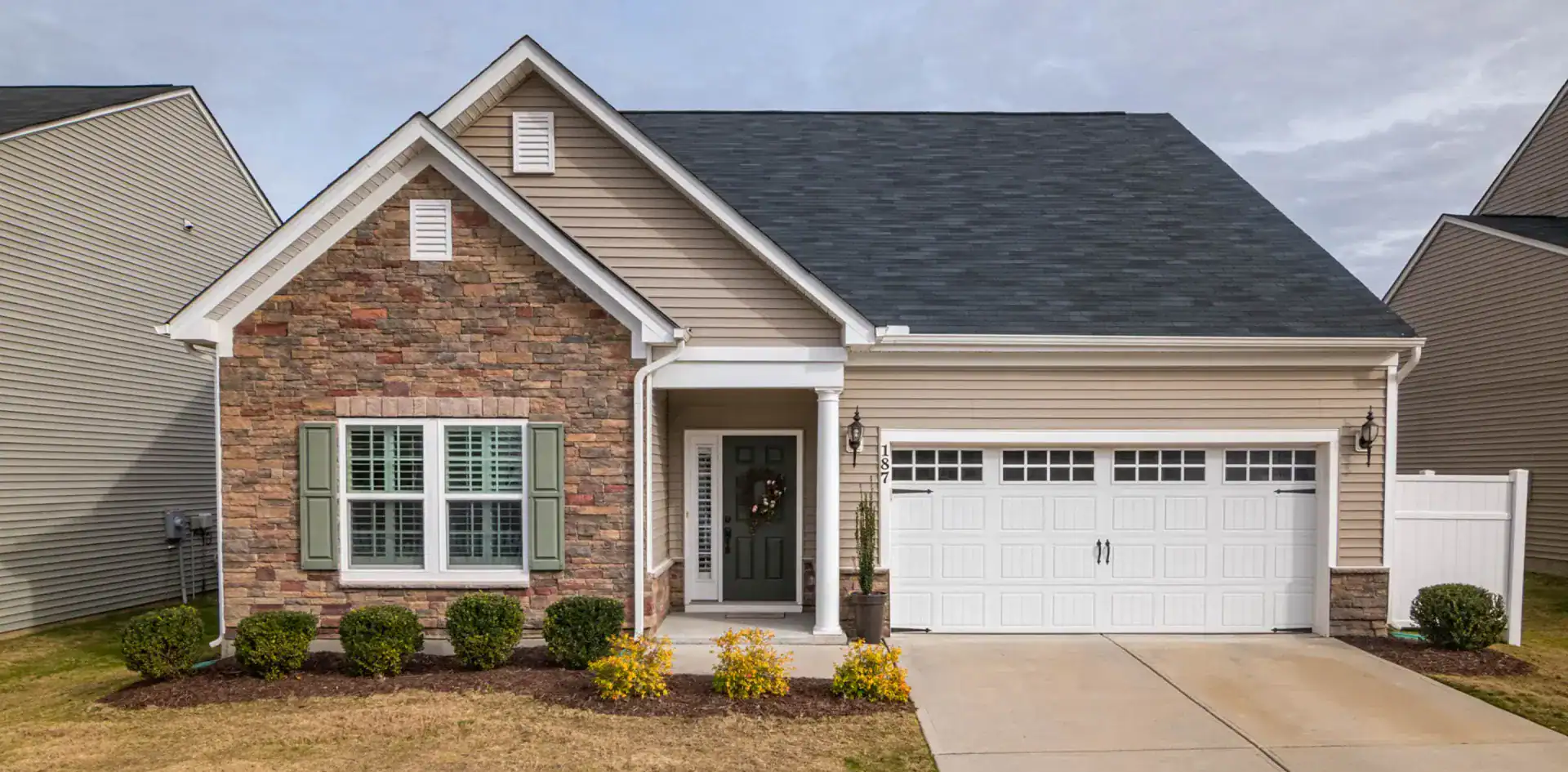
Your addition shouldn't look like an "add-on." To protect your resale value, the new structure must seamlessly match the existing roofline, siding, and masonry. In the DFW market, first impressions are everything. Projects that include updated garage doors or custom stone facades often see ROIs as high as 268%. We ensure that your expansion enhances the architectural story of your home rather than interrupting it.
6. Design Synergy Protects Resale Value
A well-planned addition starts long before framing. As an approved builder with Architectural Designs, we have access to thousands of world-class home plans that can be customized to align with your existing home's aesthetic, roof geometry, window proportions, and exterior material palette. That matters in Tarrant County neighborhoods where buyers notice immediately when an addition feels disconnected from the original structure.
Our job is to create design synergy, not visual compromise. We help you select or adapt plans that respect the architectural language of your current home, then carry that vision through material coordination, permitting, and construction oversight so the finished addition looks like it was always part of the house. For homeowners in Keller, Southlake, Grapevine, and across North Texas, that kind of seamless integration protects both comfort today and marketability later.
7. Navigating the Regulatory Burden
Permits, zoning requirements, and building codes in Tarrant and Denton counties are not just paperwork. They are part of the safeguard that protects your property, your resale position, and your peace of mind. An addition completed without proper approvals or inspections can become a liability that delays or damages a future sale.
At PRO Construction, we carry that burden for you through permitting and inspections, helping ensure that each wire, pipe, beam, and structural connection is documented and brought into compliance. That paper trail matters. Buyers, inspectors, and appraisers in places like Keller, Flower Mound, and Fort Worth want evidence that the work was done correctly, and we make sure that proof is part of the finished project.

8. The Tarrant County Tax Impact
It is our duty to be transparent: a significant addition will likely trigger a reassessment of your property taxes. In Tarrant County, where tax rates hover between 1.6% and 2.2%, adding 500 square feet of conditioned space could add roughly $1,500 to $2,500 to your annual tax bill. When calculating your total ROI, we help you factor in these carrying costs so there are no surprises in your long-term financial plan.
9. Quality of Craftsmanship as Insurance
In a market full of rushed renovations and surface-level improvements, disciplined craftsmanship stands out. Buyers in 2026 are more informed than many sellers expect, and they can often recognize careless work before they step through the front door.
Using durable materials—such as impact-resistant roofing, energy-efficient windows, and high-grade insulation—functions as practical insurance for your resale value. When we manage a project, we supervise each phase with a disciplined eye so the work behind the walls supports the finish materials you see every day. That same standard has shaped local projects from 6612 Rhea Ridge Dr to Belaire Drive, where usable space, structural performance, and long-term durability mattered more than shortcuts.
10. Quality You Can Touch
A home addition is only as dependable as the finishes your family uses every day. Paint, windows, doors, cabinetry, and plumbing fixtures are not decorative afterthoughts. They influence durability, maintenance, energy performance, and the way the new space feels from the first day you use it.
That is why we coordinate with trusted suppliers and brands, including Sherwin-Williams for paint, Builders FirstSource for key building materials, ProSource for finish selections, Pella for high-performance windows and doors, and Kohler or American Standard for plumbing fixtures. These choices help keep the finished addition durable, cohesive, and built for daily life, not just for photographs on completion day.
11. Flexible Space That Broadens Buyer Appeal
One of the clearest trends we continue to see across the Northwest Metroplex is demand for homes that can adapt to changing family needs. A well-designed addition that creates a private bedroom suite, expanded living area, dedicated office, or more functional garage-connected space can make a property far more attractive to future buyers in Tarrant County.
That flexibility matters in communities like Keller, Grapevine, Fort Worth, and even nearby Denton County, where multi-generational living, work-from-home needs, and long-term occupancy planning are shaping buyer expectations. In many cases, homeowners do not need a separate structure to improve market appeal. They need well-planned space that feels intentional, integrated, and easy to live in for years to come.
12. Financing for the Long Haul
A home addition is a major investment, and the way you fund it affects the quality of decisions you can make throughout the process. We offer flexible financing options to help homeowners manage budgets without compromising workmanship or material quality. In some cases, those conversations may also involve trusted local lending relationships, including Gus Moreland at First United Bank, depending on your goals and financing strategy. When you use your existing equity to improve a well-located home in the DFW market, you are making a calculated investment in your own property rather than absorbing the full cost and disruption of moving.
Key Takeaways for Tarrant County Homeowners
- Prioritize Bedrooms: Moving from a 3-bed to a 4-bed home is the most reliable way to jump into a higher value bracket.
- Seamless Integration: If it looks like an addition, it's a subtraction from your resale value. Match your existing architecture perfectly.
- Design Synergy Matters: The right plan, coordinated materials, and proper permitting help your addition feel original to the house, not patched on later.
- HVAC is Mandatory: If you want the square footage to count in an appraisal, it must be conditioned and integrated into the home's primary systems.
- Documentation is King: Keep all permits and inspection reports to prove the structural integrity to future buyers.
- Finishes Matter: Durable, well-chosen finishes from proven brands help your addition perform better and age more gracefully.
Frequently Asked Questions
How much does a home addition cost per square foot in DFW?
In 2026, a high-quality, fully conditioned addition in Tarrant or Denton County typically ranges from $210 to $360 per square foot, depending on the complexity of the build and the finishes selected.
Will a sunroom increase my property taxes as much as a bedroom?
Generally, yes, if the county appraiser considers it "livable space." However, if it is not fully conditioned (HVAC), it may be assessed at a lower rate, though this also lowers your potential resale value.
Do I need a new foundation for a small room expansion?
Yes. Any time you increase the footprint of your home, a new, engineered foundation is required. We often recommend post-tension slabs to handle the local soil conditions in North Texas.
How long does a typical home addition take?
Most mid-sized additions in the Keller or Fort Worth area take between 4 to 6 months from initial design and permitting to final inspection.
Your Legacy, Our Craftsmanship
At PRO Construction, A Boomer Group Inc. Company, we’ve spent over 25 years building more than just rooms. Under Bruce Laing’s local leadership and experience, we have built a reputation for honest, steady work across North Texas. Whether you are in Keller, Southlake, Grapevine, Fort Worth, or nearby Denton County communities, our job is to help you protect your home’s structural integrity, improve day-to-day function, and strengthen long-term value with clear communication from start to finish.
If you want to talk through site feasibility, design direction, budgeting, or next steps, start a conversation with our team here or call 817-372-0211.
