
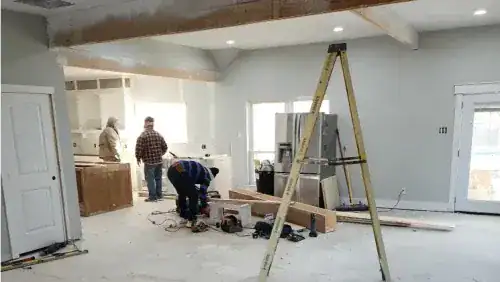
What happens when a construction consulting plan begins with an attractive estimate but ends with missed deadlines, unclear change orders, and quality concerns hidden behind layers of subcontractors? Who is watching the budget while design decisions are still changing? And who protects your interests when the contractor’s schedule, the architect’s plans, and the material supplier’s lead times no longer align?
For homeowners in Keller, Fort Worth, Southlake, Grapevine, Denton, and Flower Mound, construction consulting and owners representation provide a disciplined answer. You gain an experienced construction professional who helps translate plans into accountable action, reviews costs, coordinates the people doing the work, and keeps your long-term goals at the center of every decision.
At PRO Construction, A Boomer Group Inc. Company, we approach this responsibility with more than 25 years of local experience under Bruce Laing’s leadership. Our role is not to create pressure. It is to create clarity, protect your investment, and provide steady oversight from early planning through closeout.
What Is Construction Consulting?
Construction consulting is professional guidance for the planning, budgeting, procurement, and execution of a residential construction project. A consultant may become involved before you select a builder, during contract negotiations, or after construction has already begun.
For a homeowner, construction consulting may include:
- Reviewing the project scope and architectural plans
- Developing or testing a preliminary budget
- Identifying constructability concerns
- Comparing contractor proposals and allowances
- Reviewing schedules and procurement plans
- Evaluating change orders
- Coordinating contractors, designers, suppliers, and inspectors
- Monitoring quality and completion
- Helping prepare for final inspections and closeout
This guidance can be valuable for a custom home, garage build, workshop, metal building, home addition, attic conversion, or whole-home renovation. The larger and more complicated the project, the more important it becomes to have someone who understands how individual decisions affect the entire build.
For example, an attic conversion is not simply an interior remodeling project. It may require structural evaluation, load-bearing modifications, stair access, insulation improvements, electrical updates, HVAC planning, and code compliance. A consulting professional helps ensure those decisions are evaluated together rather than handled as isolated tasks.
What Does an Owner’s Representative Do?
An owner’s representative, sometimes called an owner-side construction manager, represents the homeowner’s interests throughout the project.
The owner’s representative is responsible for helping you understand what is being proposed, what it costs, when it should happen, and whether the work meets the agreed standard. That does not mean the representative replaces the architect, engineer, municipal inspector, or trade contractor. Instead, the representative coordinates the information between those parties and helps you make informed decisions.
Your owner’s representative may:
- Establish a clear scope of work.
- Help organize design and construction documents.
- Review contractor bids and exclusions.
- Track the budget against actual commitments.
- Monitor the schedule and identify risks early.
- Verify that change orders are properly documented.
- Coordinate material selections and delivery.
- Review workmanship and unresolved items.
- Assist with punch-list completion and warranty documentation.
This is particularly important in North Texas, where residential projects often involve complex site conditions, expansive clay soils, post-tension slabs, municipal permitting, HOA requirements, and long lead times for windows, cabinetry, appliances, and specialty finishes.
Project Management vs. Owners Representation
The terms project management and owners representation are often used interchangeably, but they describe different perspectives.
Project management
Project management is the organized process of planning and controlling the work. A project manager typically focuses on:
- The construction schedule
- Daily or weekly coordination
- Subcontractor sequencing
- Material procurement
- Inspections
- Safety and site logistics
- Progress reporting
- Completion milestones
A general contractor’s project manager works to deliver the project according to the contractor’s scope and agreement.
Owners representation
Owners representation focuses on the homeowner’s objectives. The owner’s representative asks questions such as:
- Does this proposal reflect the scope we actually want?
- Is this change order necessary and fairly priced?
- Does the schedule support our move-in or occupancy needs?
- Are allowances realistic for the quality level we expect?
- Is the work matching the approved plans?
- Are we making a decision now that will create a larger cost later?
In some arrangements, an owner’s representative is independent of the builder. In others, an experienced general contractor may provide owner-focused consulting and project oversight as part of a transparent design-build or construction agreement.
The key is clarity. The contract should explain who is responsible for each decision, how fees are calculated, how costs are disclosed, and how potential conflicts are handled.
How Cost Oversight Protects Your Budget
A construction budget is more than a single number. It includes labor, materials, permits, design, engineering, site work, equipment, allowances, general conditions, and contingencies.
Without disciplined cost oversight, a project can appear to be within budget while important costs remain uncommitted or excluded. A detailed construction consultant or owner’s representative helps maintain a living budget that tracks:
- Original contract value
- Approved change orders
- Pending changes
- Allowances and selections
- Paid invoices
- Remaining commitments
- Contingency usage
- Forecasted cost to complete
This matters whether you are building a detached garage in Southlake, expanding a home in Keller, renovating a kitchen in Grapevine, or converting unfinished attic space in Flower Mound.

A professional review of contractor proposals can also reveal gaps. Two bids may appear similar until you compare foundation assumptions, insulation levels, finish allowances, electrical scope, cleanup, temporary protection, and warranty obligations. A lower initial price is not necessarily a lower final cost.
Why a Guaranteed Maximum Price Can Help
A Guaranteed Maximum Price, or GMP, is a contractual cost ceiling for a defined scope of work. It is often used with a cost-plus structure, where actual allowable project costs are documented and the contractor receives an agreed fee, subject to the maximum amount established in the agreement.
A GMP can provide homeowners with three important protections:
- A defined upper limit: You have a clearer ceiling for the included scope.
- Cost visibility: The agreement can require documentation for reimbursable costs.
- A framework for changes: The contract can explain how owner-requested changes, allowances, contingencies, and unforeseen conditions are handled.
A GMP is not a promise that every possible project expense will remain fixed. It protects the defined scope. If you add square footage, upgrade finishes, change the plans, encounter unknown conditions, or select materials above the stated allowance, the GMP may need to change through a documented process.
That is why the details matter. Before signing, ask:
- What exactly is included in the GMP?
- Which costs are reimbursable?
- Are permits, design fees, and engineering included?
- How are allowances calculated?
- Who controls contingency funds?
- How are savings handled?
- What documentation accompanies each change order?
- What events allow the GMP to be adjusted?
A construction-savvy attorney should review the contract language for your specific circumstances. An owner’s representative can help you understand the construction and financial implications before legal review.
Quality Control and Contractor Coordination
Quality control is not limited to looking at the finished room. It begins before work starts.
The plans must be coordinated. Structural details must align with architectural drawings. Mechanical, electrical, and plumbing systems must fit within the design. Materials must arrive before the crew needs them. Inspections must occur at the right stages. When one of these elements is missed, the result may be rework, delay, or an expensive compromise.
An experienced advocate helps establish checkpoints for:
- Foundation and slab work
- Framing and load-bearing elements
- Roof and weatherproofing
- Windows and exterior openings
- Rough plumbing, electrical, and HVAC
- Insulation and drywall
- Cabinetry, flooring, and finish installation
- Final punch-list items

This coordination is essential on projects that combine several trades, such as a garage with a workshop, a home addition connected to an existing kitchen, or a custom home with a metal exterior and specialized interior finishes.
Local Knowledge Matters in Tarrant and Denton Counties
Construction is local. The same project concept can face different site, permitting, access, drainage, or HOA considerations depending on where the property is located.
In Keller and Southlake, site feasibility and neighborhood requirements may influence the size and placement of an addition or detached garage. In Fort Worth and Grapevine, existing homes may require careful investigation before structural alterations. In Denton and Flower Mound, property layout, utility coordination, and jurisdiction-specific review can affect the schedule.
Our home addition planning resources and structural renovation guidance explain why early planning matters. We also bring relationships with local partners, including Gus Moreland at First United Bank, Builders FirstSource, ProSource, and Sherwin-Williams. Reliable partnerships help support financing conversations, material coordination, product selections, and project continuity.
Key Takeaways
- Construction consulting helps you evaluate scope, costs, risks, and constructability before and during a project.
- An owner’s representative advocates for the homeowner’s goals and provides organized oversight.
- Project management focuses on coordinating the work; owners representation focuses on protecting the owner’s interests.
- A GMP can provide a defined ceiling and better cost transparency when the scope and contract language are clear.
- Quality control requires planned checkpoints, not just a final walkthrough.
- Local experience matters when working through North Texas soil conditions, permitting, inspections, suppliers, and subcontractor coordination.
- The right advocate helps protect both your budget and the long-term value of your home.
Frequently Asked Questions
Is an owner’s representative only for large commercial projects?
No. Residential owners representation can be valuable for custom homes, major renovations, additions, garages, workshops, and attic conversions. The appropriate level of service depends on the project’s size, complexity, and risk.
Can a general contractor also serve as an owner’s representative?
Yes, but the arrangement must be clearly defined. If the same company is building the project and providing advisory oversight, the scope, fees, cost reporting, and change-order procedures should be transparent from the beginning.
Does a GMP guarantee that the homeowner will never pay more?
No. A GMP applies to the defined scope and stated assumptions. Owner-requested changes, unknown site conditions, incomplete documents, and upgrades may affect the final cost if the contract allows adjustments.
When should I hire a construction consultant?
The best time is before finalizing the design or signing a construction contract. Early involvement allows the consultant to identify budget gaps, coordination problems, and scheduling risks before they become expensive.
Start With a Clear Conversation
Your home is more than a construction project. It is a significant financial asset, a place where your family may live for decades, and part of the legacy you are building. You deserve an advocate who treats the technical details with the seriousness they require.
PRO Construction, A Boomer Group Inc. Company, provides construction consulting, project management, and owner-focused guidance throughout North Texas. With Bruce Laing’s 25 years of local experience, we help homeowners plan durable, well-coordinated work in Keller, Fort Worth, Southlake, Grapevine, Denton, Flower Mound, and surrounding communities.
To discuss your build, renovation, addition, garage, or custom home project, start a conversation with PRO Construction or call 817-241-1112.
Honest, steady work protects more than the schedule. It protects your investment.
Leave a Reply